

Destination Sunday: Residents Aren't Stakeholders. They're the Experience.
Guests borrow trust from the people who already belong.

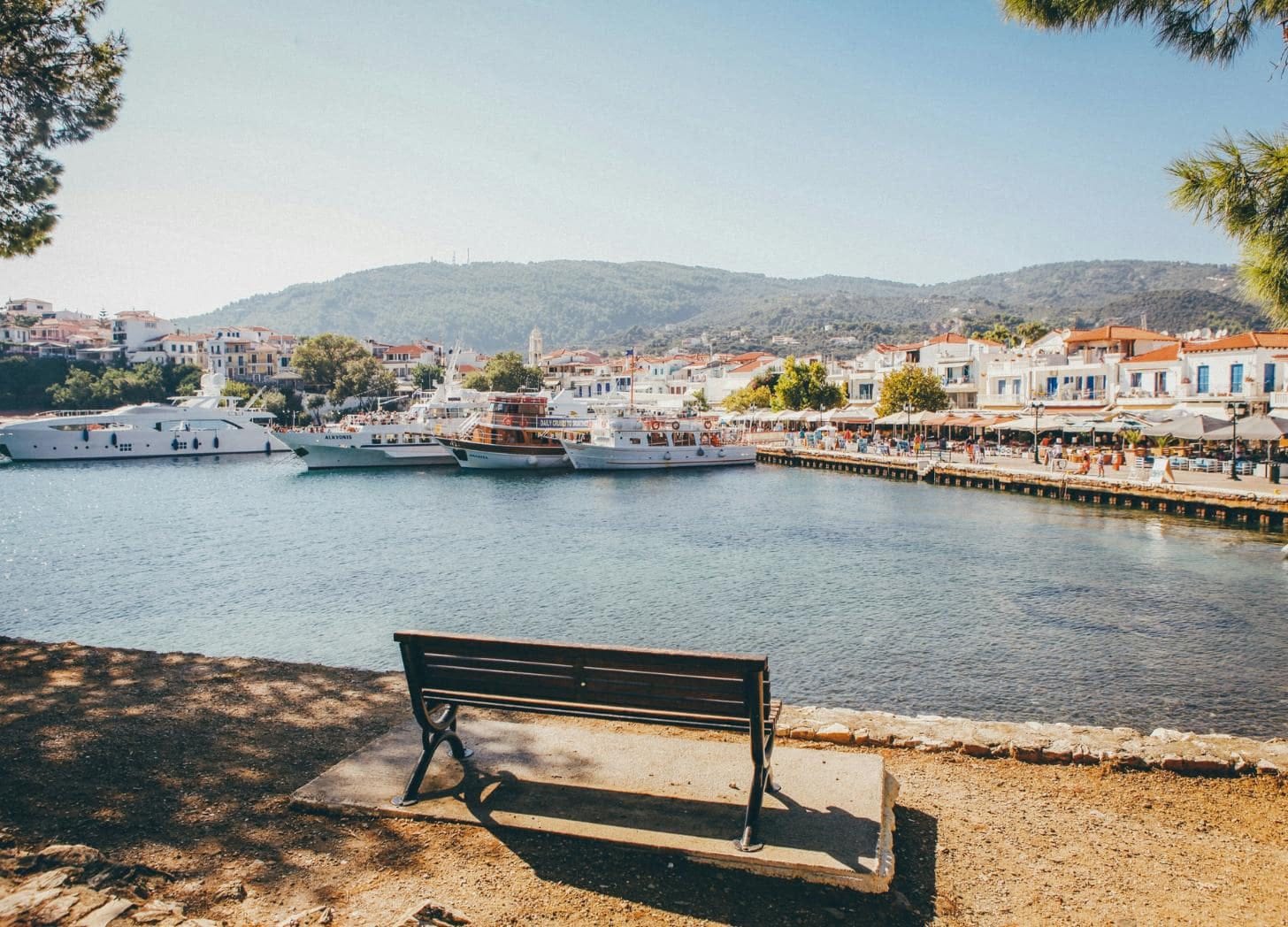
The ferry pulls into a harbor town somewhere in the Mediterranean. Late-shoulder season. Morning light cuts across the water. A couple steps off with their bags, following the trickle of passengers toward the old town.
They pass the taxi stand. The drivers are clustered together, scrolling phones, not looking up. A shopkeeper adjusts a display with her back turned. At the café terrace overlooking the quay, a server clears plates and sets down a folded menu without a word.
Nothing is rude. Nothing is wrong.
But nothing welcomes them either.
Now picture a different arrival. A nod from a fisherman. A warm word they don’t understand. A half-smile at a café table. Same infrastructure. Different climate.
That feeling will shape everything that follows. How long they stay, how much they explore, and whether they come back.
Here’s what’s actually happening:
Guests decide trust before check-in
Trust is borrowed from locals
When residents withdraw, loyalty collapses quietly
Destinations pay to replace guests they already earned, in ad spend and incentives
You don’t see it in arrivals. You see it in how often you have to replace the same guest.
This is the first audit. Because it sets the emotional weather, everything else operates inside.
What you’ve probably been told
Most destination strategies treat residents as stakeholders.
They appear in the strategy deck. They get a slide. They’re consulted, surveyed, occasionally addressed with policy. When tensions rise, they become a communications problem to contain.
This framing makes sense on paper. Residents are one group among many. Alongside visitors, businesses, and government, whose interests must be balanced.
But there’s a problem with this framing.
It treats residents as adjacent to the guest experience. A concern to manage. A variable to optimize around. Not the thing itself.
What’s actually happening underneath
Residents aren’t adjacent to the experience. They are the experience.
Guests don’t arrive into a vacuum. They arrive into a place already full of people who belong there. And from the first moment, visitors are reading signals they can’t name:
Does this place feel at ease with itself?
Do the people here seem like they want me here?
Is this somewhere real or just a surface?
Those signals don’t come from your website. They come from residents. The taxi driver. The shopkeeper. The person walking their dog who makes eye contact… or doesn’t.
Guests borrow their sense of trust from the people who already belong.
This is the atmosphere visitors read before they evaluate anything. Residents set that atmosphere. They always have. And most destination strategies treat that like a footnote.
When residents are aligned, when tourism feels like something that benefits them, when they want visitors there, guests absorb that. The welcome is ambient. The place feels alive.
When residents withdraw, stop recommending, stop engaging, answer questions with the minimum required, guests absorb that too. They can’t articulate it. But they feel it.
You can think of it this way: Signal → Encoding → Memory → Pull.
A warm local interaction becomes the story guests tell later. A thin interaction becomes nothing to repeat.
Not a complaint. Not a bad review. Just the quiet absence of a reason to return.
Every weak signal increases reacquisition pressure. Misaligned destinations pay for the same visitor twice: once to acquire them, again to replace them when they don’t come back.
How to know it’s happening
You won’t find this in your arrivals dashboard. But the signals are already visible.
Three observable signals:
Guided vs. self-directed behavior. Do guests ask locals and staff for recommendations? Or do they default to Google and OTA lists? When visitors stop asking, it often means they’ve stopped expecting useful answers.
Referral behaviour. How often do residents recommend non-obvious places? The local who sends visitors to the tourist trap instead of the good restaurant isn’t being rude. They’ve just stopped investing.
Repeat visitation language. Look at reviews and direct booking notes from returning guests. “I came back because...” tells you what encoded. If that language is absent or purely transactional, the pull isn’t forming.
None of these require a survey. Just attention.
How this plays out across a destination
The real cost starts before anyone marches.

It starts when resentment leaks instead of protests.
This might look like: the local who used to recommend the good restaurant now sends visitors to the tourist trap. The taxi driver who used to chat gives one-word answers. The bartender who used to linger over a recommendation moves straight to the next order.
Guests feel this. Not as hostility, just as an absence. The place stops inviting them deeper. They leave satisfied on paper. But they leave with nothing to miss.
By the time it reaches the streets, tens of thousands marching with “Canarias tiene un límite” banners across the Canary Islands, protesters in Barcelona firing water pistols at diners. The damage has been compounding quietly for years. The protests made headlines. The leak is what actually costs those destinations.
Economic dependence and emotional alignment aren’t the same thing.
A resident can understand that tourism matters and still feel like the costs land on them while the gains flow elsewhere. They know the industry pays their wages. They’re still exhausted, still priced out, still watching their town become a backdrop for someone else’s holiday.
This is where “stakeholder engagement” falls flattest. Surveying people who depend on you for work doesn’t surface honest sentiment. It surfaces what they think you want to hear.
Resident buy-in isn’t about liking tourism. It’s about whether people still feel at home in the place visitors are borrowing.
For individual operators, this hits closer to home.
You can’t script your way past it.
If your staff are locals who feel squeezed by tourism. Priced out of housing. Exhausted by peak season. Watching their neighborhood turn into scenery for other people’s holidays. That tension will leak. Not through what they say to guests. Through how they carry themselves. The energy in the room.
Even well-run businesses can inherit this. If your operation is seen as part of the pressure rather than the community, you absorb that ambient signal whether you caused it or not.
Operators feel resident alignment first. But destinations decide whether alignment is possible at all.
There’s a useful contrast in Bhutan.
The national philosophy of Gross National Happiness shapes how hospitality feels across the country. Travel accounts and Bhutanese operators often describe guides as genuinely warm and compassionate, with interactions that feel more like connection than transaction.
The underlying climate — created by decades of GNH policy and community norms — is what makes the warmth feel natural rather than scripted.
You don’t need Bhutan’s policy stack to borrow the principle.
Resident dignity is downstream of practical decisions: housing, congestion, wages, and visitor mix.
When the people who belong feel aligned with tourism, guests feel welcomed. When they don’t, guests feel tolerated. That difference doesn’t show up in your arrival numbers. It shows up in your replacement costs.
Closer to home, some destinations are testing similar ideas with different tools.
In Amsterdam, the city has actively discouraged certain visitor segments — launching a “Stay Away” campaign and tightening rules in the Red Light District to deter rowdy party tourism that residents find most disruptive, while emphasising visitors who treat the city as more than a nightlife playground. The goal isn’t fewer tourists. It’s different tourists, ones residents are more willing to welcome.
In Palma de Mallorca, the local government has moved to ban new tourist-rental licences city-wide and to clamp down on party boats and new hostels in saturated areas, framing these measures as a way to restore balance between residents’ housing needs and tourism. These changes sit on top of zoning and impact studies that look at how tourist housing affects specific neighbourhoods, giving local authorities more leverage to respond before pressure becomes unmanageable.
The specifics vary. The principle doesn’t: resident alignment is something you design for upstream, not something you repair after the protests start.
When you keep the old lens
Residents stay in the stakeholder column. Their concerns get surveyed, consulted, occasionally addressed with policy. When tensions rise, you manage the communications.
Meanwhile, guests arrive into an ambient climate you’re not tracking.
Repeat visitation flattens, even while headline arrival numbers hold for a while. Marketing works harder to replace visitors who should already be returning. The drag on your budget keeps climbing.
You keep asking how to bring more people in. You stop noticing that the people who live there have quietly left the room.
Many destinations struggle to fix this because they’re measuring the wrong thing.
When you see it clearly
Resident alignment becomes product design, not public relations.
You can market a destination into demand. You cannot market a destination into welcome.
You start asking different questions.
Where do residents and visitors actually overlap? Where do they clash?
What would it look like if residents wanted visitors here — not tolerated them, not depended on them, but genuinely welcomed them?
What are residents saying about tourism when they’re not being formally consulted?
You start protecting the moments where visitors and locals actually meet. Not to stage authenticity. But to make sure the authentic parts of your destination haven’t withdrawn.
This isn’t an argument against growth. It’s an argument about where growth actually comes from.
Destinations with aligned residents don’t just feel warmer. They convert visitors into return guests and word-of-mouth at higher rates. The replacement cost drops. The marketing budget stops refilling a leaky bucket.
The protests in Spain didn’t just generate bad press. They signalled to potential visitors that they might not be welcome, a perception that’s expensive to reverse. The cost of resident misalignment isn’t just ethical. It shows up in reacquisition pressure, in seasonal volatility, in the gap between strong arrival numbers and flat revenue.
The destinations that compound loyalty over time aren’t the ones with the best attractions. They’re the ones where guests feel like they’ve stepped into something real.
And the people who live there haven’t left the room.
What this looks like in practice
Resident alignment isn’t a program you launch. It’s a lens you apply to decisions you’re already making.
Three levers destinations are already testing:
Revenue visibility. Ring-fencing bed taxes for resident-facing infrastructure — parking, parks, housing funds — so locals see tangible return, not just congestion.
Visitor flow. Redistributing presence so tourists don’t cluster in one neighborhood while locals avoid it entirely.
Dual metrics. Tracking resident sentiment alongside visitor satisfaction and tying staff performance to both.
None of these requires a philosophical overhaul. They require asking, before each decision: does this make residents more likely to welcome visitors, or less?
This week’s thinking prompt
If you don’t know how residents talk about tourism when you’re not in the room, you are already operating blind.
The first audit:
When did you last walk your destination as a visitor, arriving by the same route, moving through the same spaces, without announcing who you were, and pay attention to how locals responded to you?
If you haven’t done this recently, that’s your Monday morning move. Everything else follows from what you notice.
For destination leaders — paste this into an AI assistant or bring it to your next strategy meeting:
I lead tourism strategy for [destination/region].
Context: Residents aren’t just stakeholders — they shape the ambient welcome guests feel before any service interaction happens. When residents are aligned with tourism, guests absorb that warmth. When residents withdraw — even silently — guests feel tolerated, not welcomed. This affects repeat visitation and replacement costs more than most dashboards track.
I want to audit whether resident alignment is supporting or undermining guest experience here.
Ask me 5–7 diagnostic questions that help me uncover:
1. Where visitors and residents physically encounter each other (not just in formal settings)
2. What the ambient tone feels like in those moments — welcoming, neutral, or withdrawn
3. Where quiet resentment might be leaking into guest experience (before it becomes protest)
4. What residents say about tourism when they’re not being formally consulted
5. Whether we’re measuring resident sentiment or just assuming it
Keep questions concrete and observational — things I could answer by walking the destination or talking to frontline staff. Avoid abstract policy questions.
For operators:
I run a [hotel / restaurant / tour company] in [location].
Context: Even well-run businesses can inherit tension from the destination around them. If locals feel squeezed by tourism — priced out, exhausted, or displaced — that affects how staff carry themselves and how neighbours perceive the business. Guests sense this as atmosphere, not service failure.
I want to understand whether my business is seen as part of the local welcome or part of the tourism pressure.
Ask me 5–7 diagnostic questions that help me uncover:
1. How my business is perceived by immediate neighbours and local community
2. Whether my staff (if local) are carrying tension from housing, wages, or seasonal burnout
3. Where my operations might be contributing to friction locals feel — even unintentionally
4. What I could do to strengthen alignment with the community around me
5. Whether guests are picking up on any ambient tension I might not see
Keep questions concrete and specific to my operation — things I could observe, ask staff about, or test this week. Avoid generic “community engagement” framing.
Monday’s question for operators:
Is your business seen as part of the welcome or part of the pressure?
How would your neighbors answer that?
This isn't about being liked.
It's about being welcomed. And welcome is the most expensive thing to fake and the cheapest thing to lose.
If you missed last week’s Destination Sunday:

Always such great insights, Kay. And the prompt is such a good idea. Walk through the destination and see how it feels, responses and vibe.