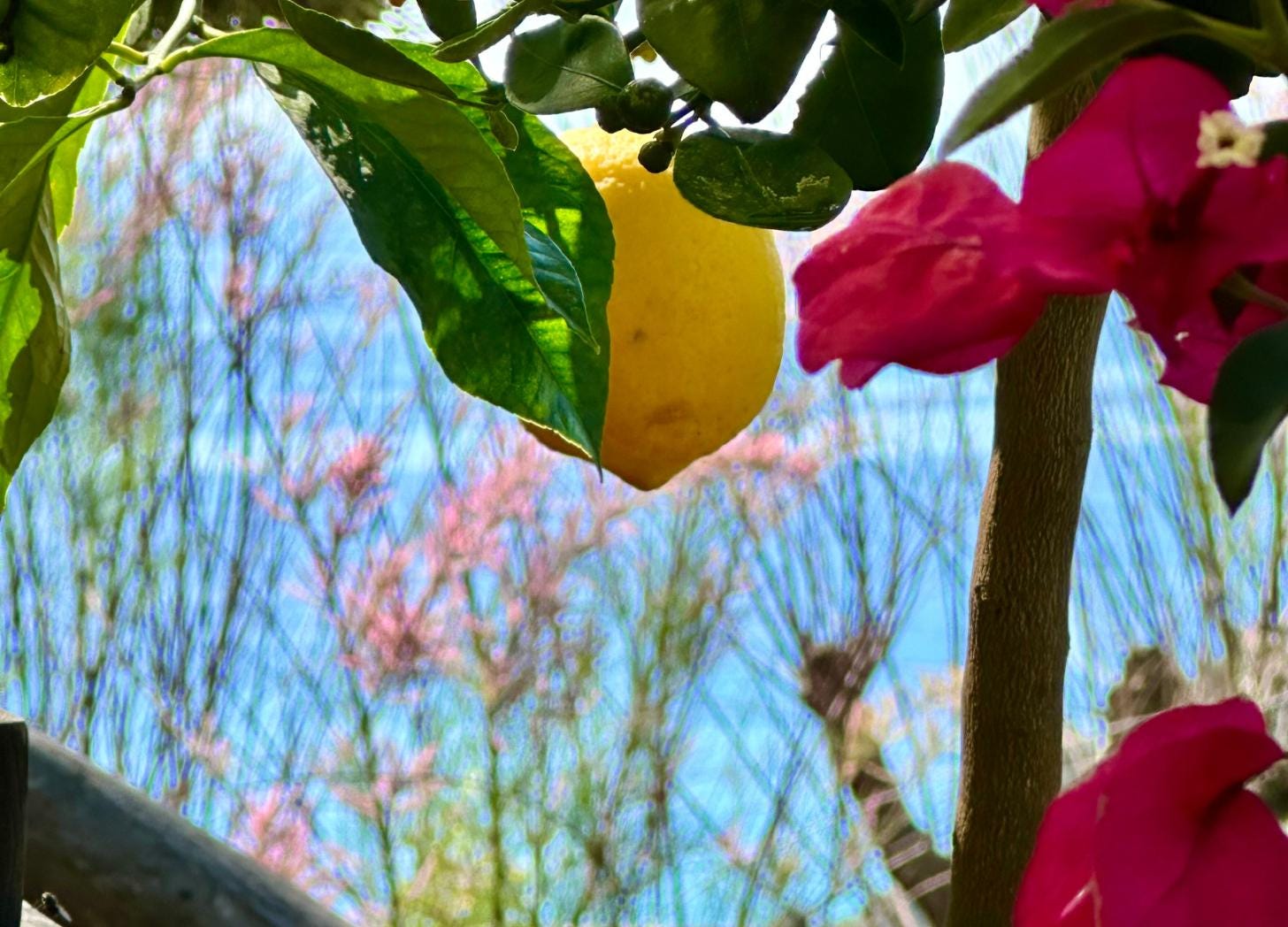
The Hillside Above Menton
Inside the Menton lemon orchard the Gannac family built from a fallow hillside in 1991, and what it reveals about farm tourism and succession.

Menton, France is known for lemons. Lemon soap, lemon tea towels, lemon-print dresses, lemon sorbet, limoncello, and lemon tarts in every café window.
A few weeks ago, I was wandering le vieux (old) village and popped into a boutique on Rue Saint-Michel. The shopkeeper handed me a slice of Menton lemon. Rind, pith, pulp. Eat the whole thing, she said. So I did. No bitterness. The peel and pith were almost sweet.
That’s the part most people throw away.
Most visitors to Menton never taste it.
I wanted to know how a lemon could taste like that. So I went looking for the origins of the Menton lemon and contacted Maison Gannac to make a reservation to visit their mountainside orchard.
The lemons at Maison Gannac are the size of grapefruits. A few are even bigger.
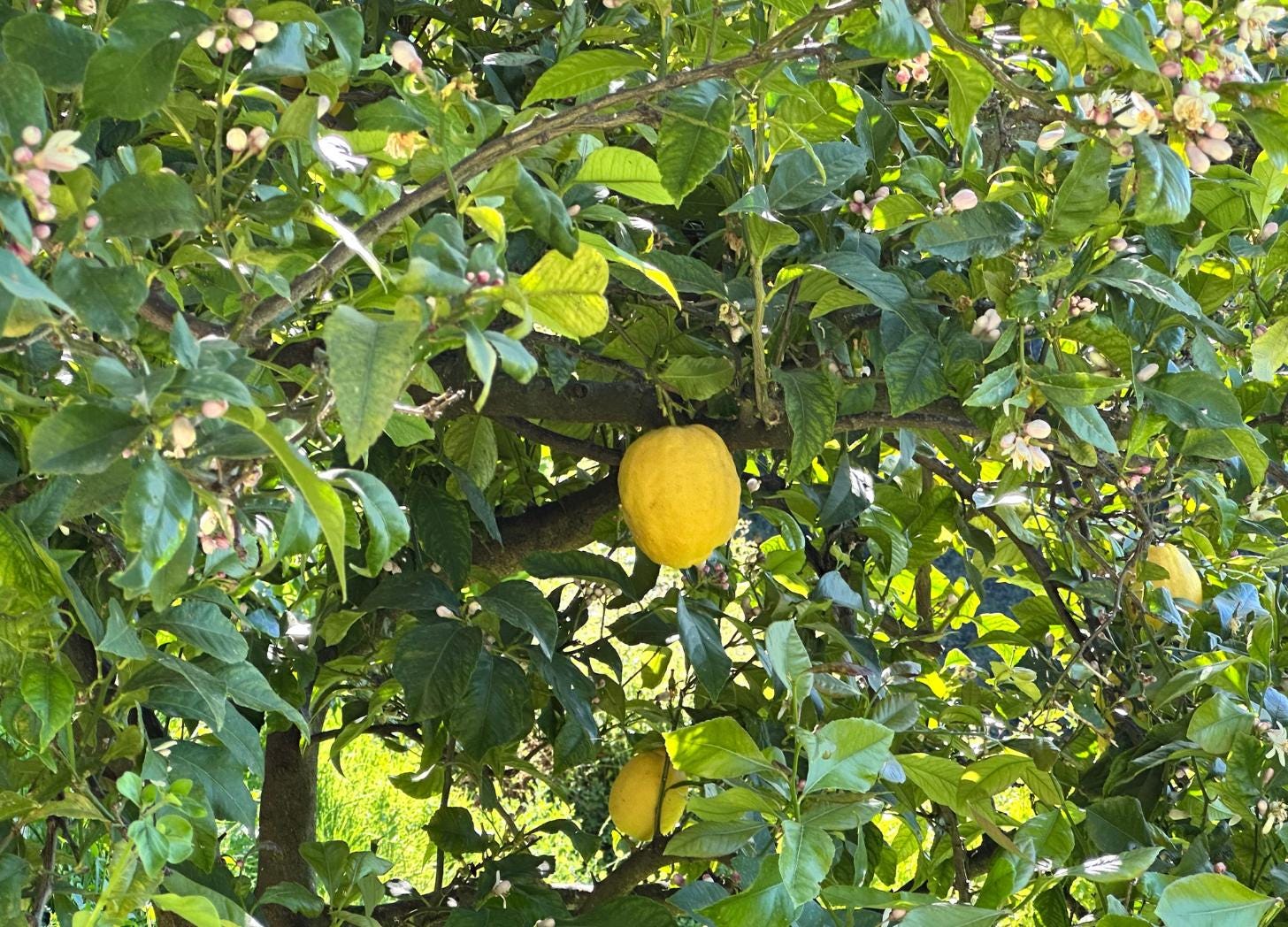
I walked steep dirt paths above Menton. The path was loose under my feet. I kept stopping, stunned that branches could hold fruit that big. Huge lemons with thick peel, slightly knobbed, a deep saturated yellow that made the Meyer lemons we get in the United States look small and inadequate. On the ground was a box of freshly hand-picked Menton lemons. The leaf and a bit of branch were still attached, by law. I folded a leaf between my fingers and smelled it. It smelled like the fruit.
The peel is where the flavor lives, Laurent Gannac will tell you. Having a peel you can eat is the entire reason this lemon exists.
Every February, Menton holds a festival celebrating the lemon. A quarter of a million people come from all over. The parade floats are made of real citrus — 140 tons of it. Most of those lemons are imported from Spain. Menton lemons are too rare and too expensive to build sculptures out of.
The fruit that comes off the floats afterward gets sorted and sold. Nothing wasted. The festival, the tourism office, and the farmers all work together.
Most of the festival goers never see a working orchard.
If you do, here’s what you find.
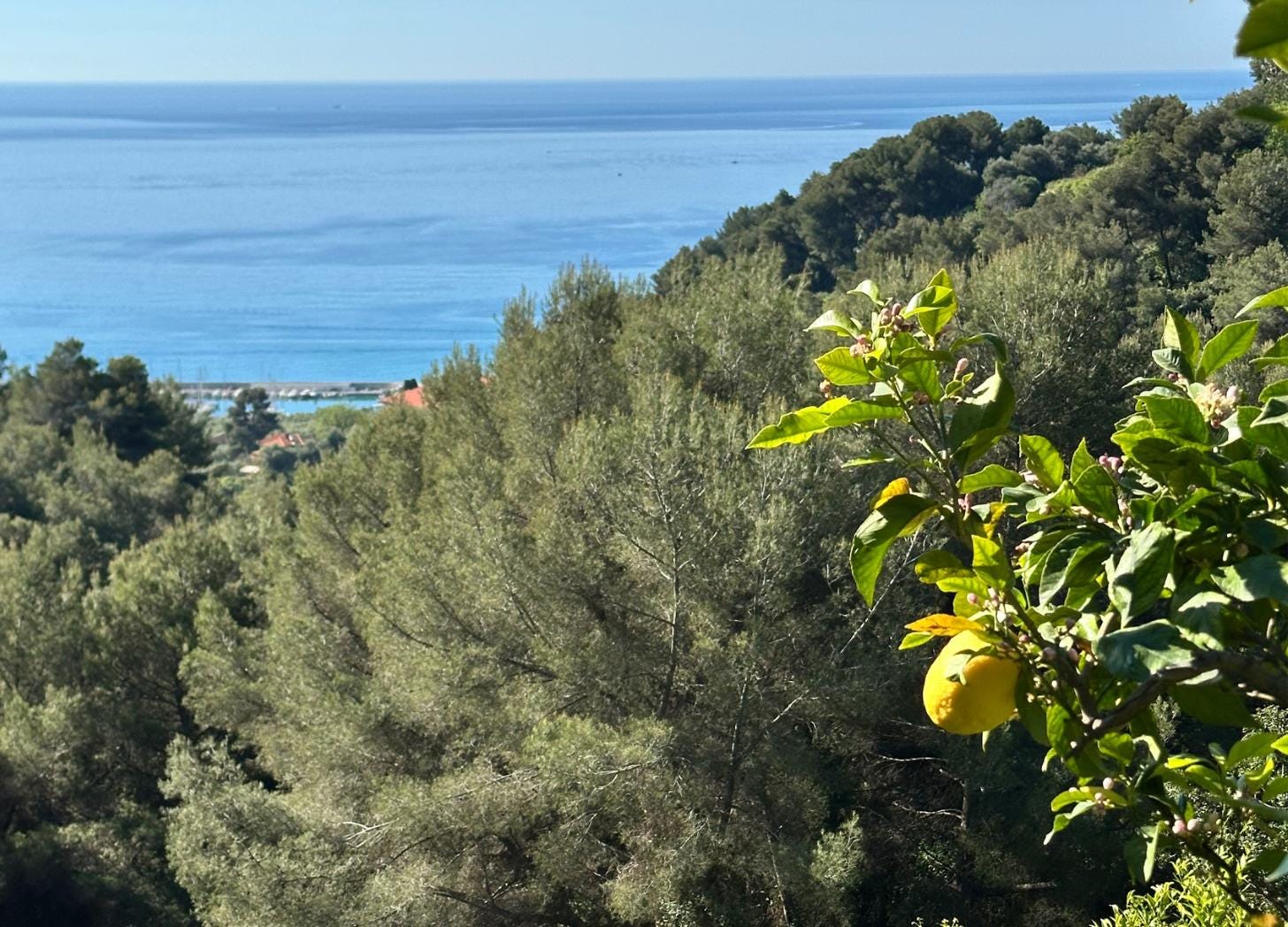
A working farm. Not a manicured tourist attraction. The paths along the restanques, or terraces. The dry stone retaining walls that turn a cliff into farmable terraces are steep and slick with loose dirt and stones. The men who pick the fruit carry 15-kilo boxes up the slope on their shoulders. The orchard sells trees to people who want to plant their own. There are bananas growing in a small grove. The micro subtropical climate exists because of the surrounding mountains, the winds come in from the sea, and sunshine.
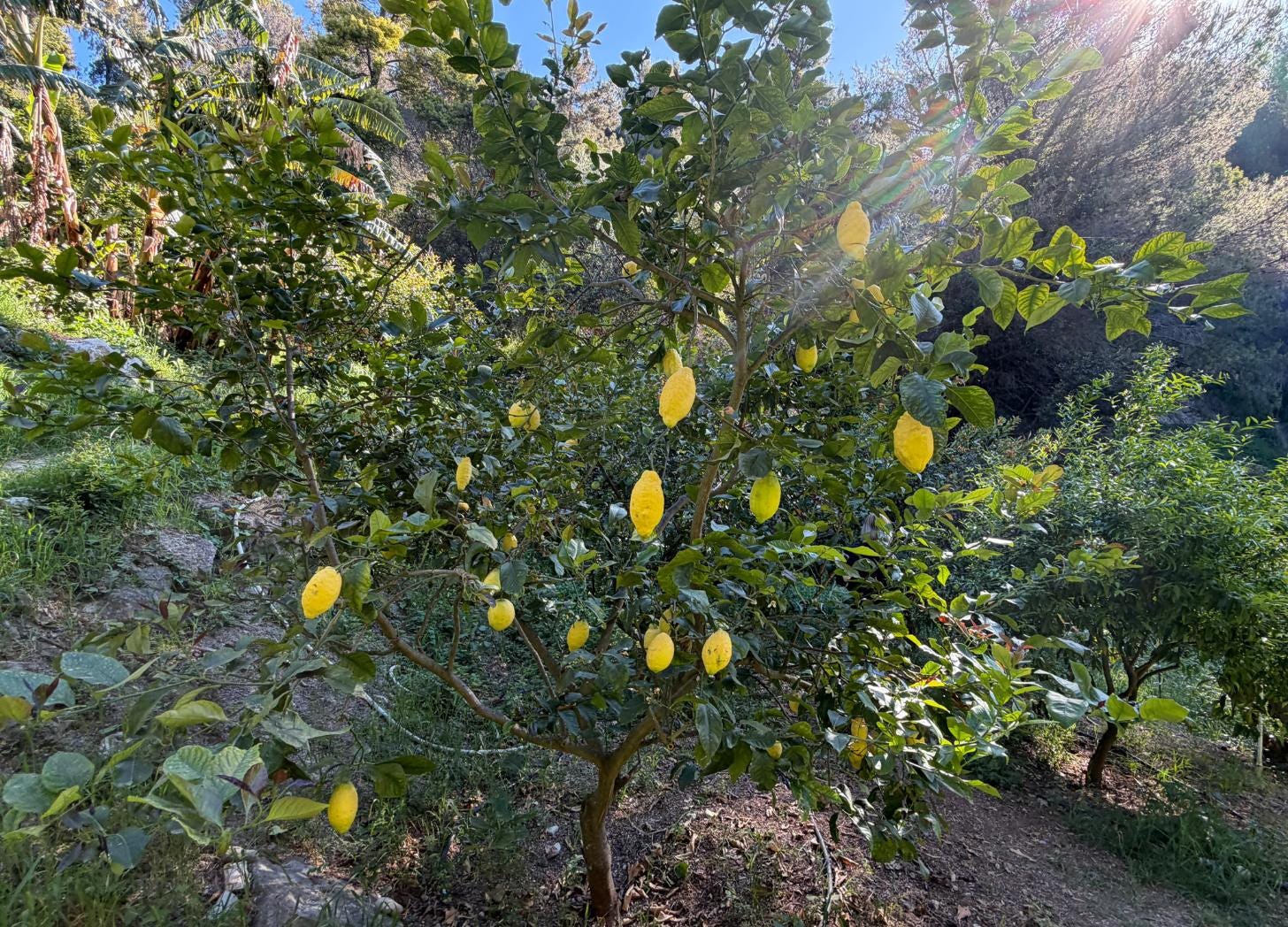
The view is the Mediterranean to the south and Italy to the east.
A kilo of these lemons sells for €17 to €20, approximately $20-25 USD.
There are 56 producers left in Menton.
A Brief History of the Menton Lemon
Cultivated here since the fifteenth century. By the eighteenth, Menton was shipping millions of lemons a year to Russia and the United States. The French Revolution took away the local protections that had kept the trade alive. The Riviera evolved into a playground for the rich. Hotels and villas replaced the terraced orchards. By 1956, a brutal winter finished off what remained of the citrus trees.
By the time tourism made the Menton lemon famous, the Menton lemon was nearly gone.
Laurent Gannac arrived in 1988.
Trained in horticulture and landscape design, Laurent Gannac chose Menton for the subtropical climate. Citrus was at the center.
He had no idea what a Menton lemon was. He had never heard of it. He was building gardens for clients, and every time he brought a lemon tree to a property, the customer would ask the same question. Is that a Menton lemon?
The repeated question forced him to find out. That is how he discovered five hundred years of history.
Around that time, he met Vanessa Zeenni. In 1991, their son Adrien was born. Laurent planted his first lemon tree the same year. Laurent bought the hillside knowing he might lose every franc. Then more parcels. He laid them out as restanques. Every retaining wall on the property is one the family built.
There were no inherited terraces. There was no inherited orchard. Just a fallow hillside and two people who decided it was worth turning back into a farm.
A lemon tree takes three to four years to bear fruit. Vanessa watered trees six hours a day. To carry the family through the wait, she trained as a hotelier and worked as a concierge in Monaco.
Adrien grew up among the trees. He says it himself in a video from a few years back.
Other people are born in cabbages. I was born among the citronniers.
He went to business school in Nice, then got an agricultural diploma at the horticulture school in Antibes. He joined his father in 2015. He brought what his father didn’t have. The idea of building a brand that ran from the tree to the shelf.
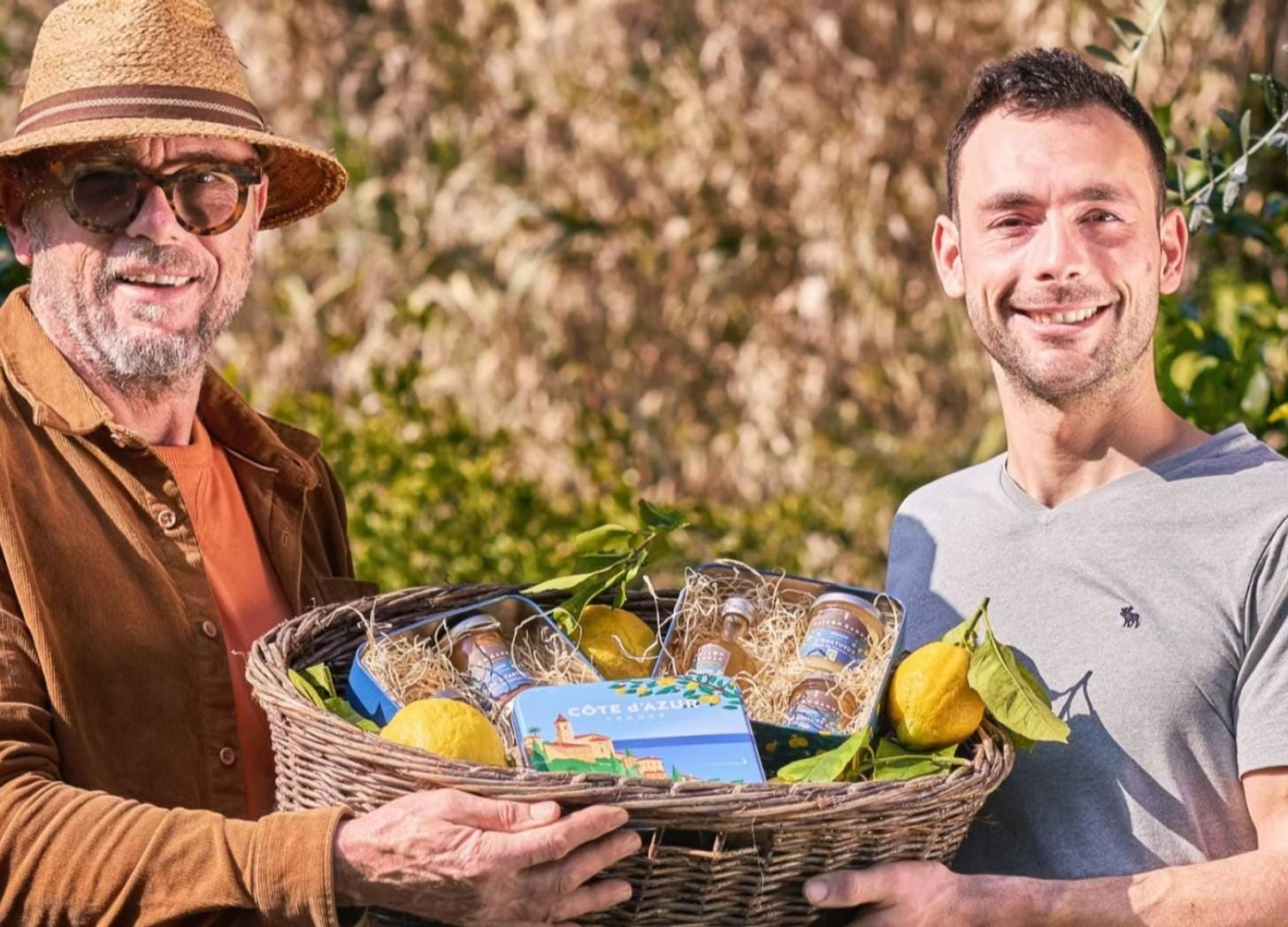
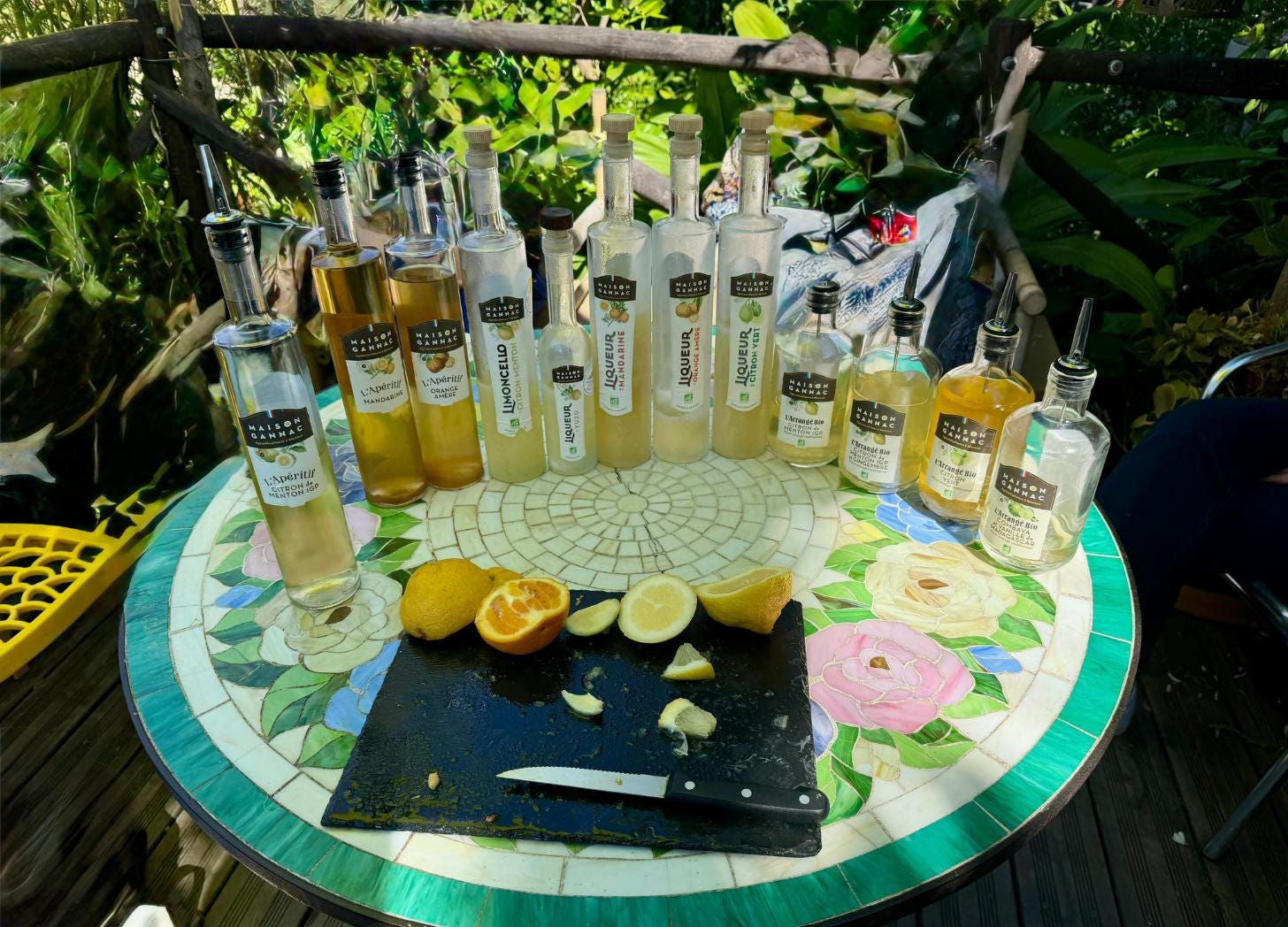
The team grew from two has grown to 30. They make almost a hundred products now. Limoncello, jams, candied lemon in salt, lemon powder, a creamy spread called L’Onctueux that he developed with the chef Philippe Colinet. They work with brewers on citrus beers. With an olive oil couple, Anne and Erwan, who make a Nice olive paste they pair with Menton lemon. Mauro Colagreco at Mirazur, the three-Michelin-star restaurant on the Italian border, cooks with Gannac lemons. So does Alain Ducasse.
The orchard visits, the boutique, all of it is farm tourism. The visit isn’t an amenity. It’s part of how the farm survives.
When Adrien needed to plant 200 more trees and convert a building into a workshop, he raised €130,000 from people who wanted to support him. A regional youth-entrepreneur program, Initiative Menton, backed him on top of that. They said it themselves in their video:
We are aware of the difficulty of starting a business in agriculture.
On my visit, Céline was the guide.
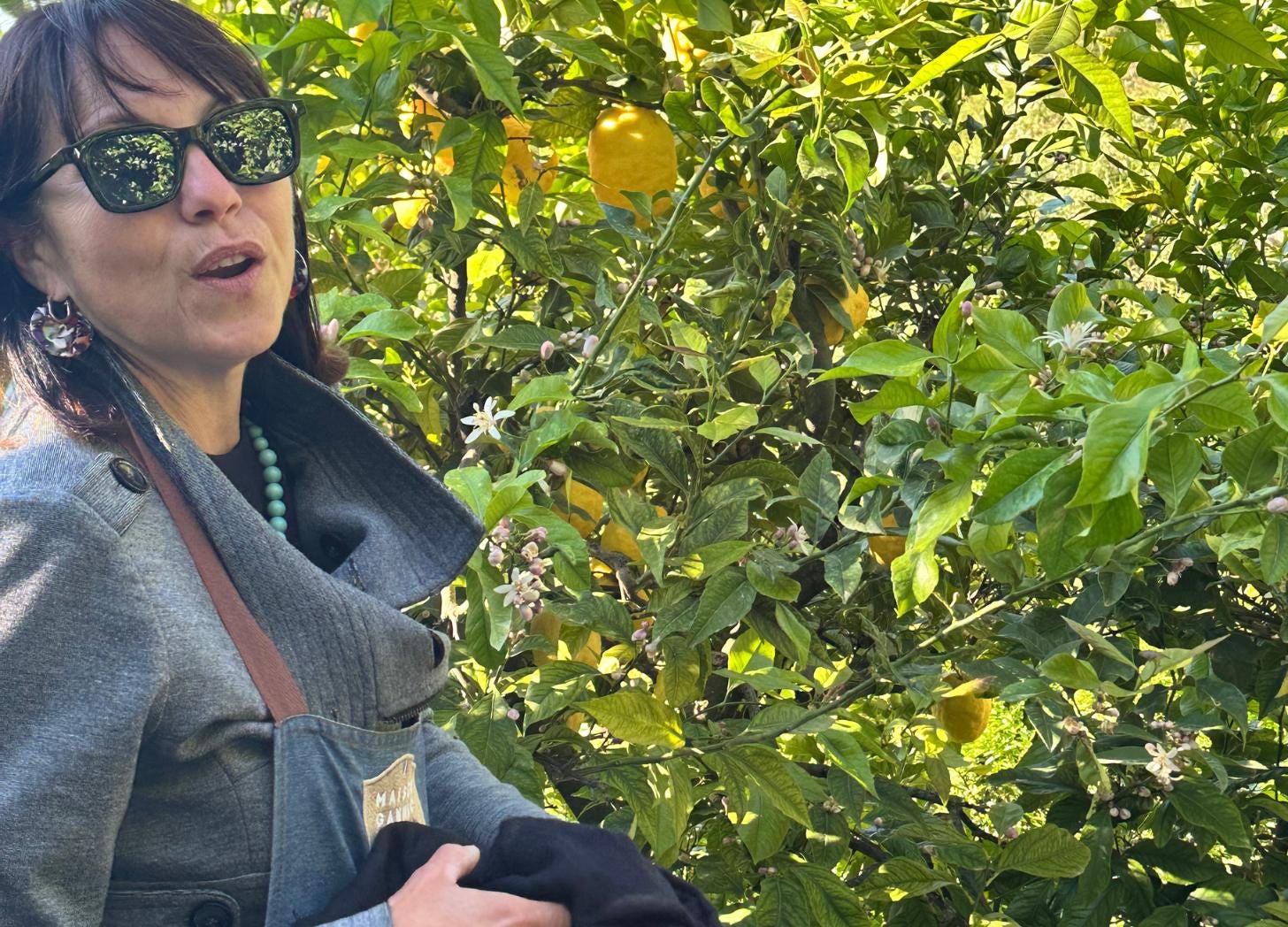
A worker walked past us with a 15-kilo box of just-picked fruit balanced on his shoulder, headed up a path. A lemon Adrien grew last year took nine months to ripen and weighed over a kilo. It’s family lore now. I also saw a tree that produces lemons and oranges from the same trunk, grafted together. Two fruits, one root. After touring the orchard, I was treated to a tasting session. Jams, preserves, and liquors, from sweet to tart.
Menton is a town built by people from all over. The Grimaldis from Monaco. The Sardinians. The English in their winter villas. The Italians whose street names still run through the old town. Laurent from Occitanie. Vanessa from Beirut. Almost nothing in Menton was originally Menton.
What gets passed down is what gets chosen. Adrien chose to come back. His cousin works in the family’s logistics now too. Younger people are coming into horticulture and want to start their own orchards, Céline told me. The interest is there.
The land prices are the problem.
The hillside Laurent bought with the risk of not getting it back in 1988 cannot be bought that way today. The same tourism economy that saved the Menton lemon by giving it an audience has driven the price of farmable terraces high enough that a young person without family money cannot start what Laurent started. The lemon survives. The next Laurent might not.
Menton hasn’t solved how to make room for the next Laurent. Most destinations aren’t yet asking the question.
Menton got very good at it. The festival, the producer network, the chefs, the guided tours. All of it works.
What we overlook is whether the next producer can afford to start. Land prices. Cost of entry. Who can still arrive.
The Menton lemon almost disappeared once. It came back because two people arrived in 1988 and decided to plant it. If they were 25 today and walked into the same town with the same idea, they could not afford the hillside.
Walking down from the orchard, I kept thinking about the kilo lemon. Nine months on a branch above the sea. Cut by hand. The whole thing held together by people who decided it was worth doing.
Menton built a brand around a lemon that almost disappeared. The lemon came back because two people arrived in 1988 and planted it. If they were 25 today and walked into the same town with the same idea, they could not afford the hillside.
Most destinations don’t get a second comeback.